Kooth / California DHCS
Soluna: California’s Youth Mental Health Platform
A multi-year engagement brought UK-based Kooth into the US market, won California's $188–271M statewide youth mental health contract, and launched Soluna across all 58 counties.
- My role
- Product strategy lead · de facto head of product
- Timeline
- 2022–2024 · From a nine-week proof of concept to statewide launch and beyond
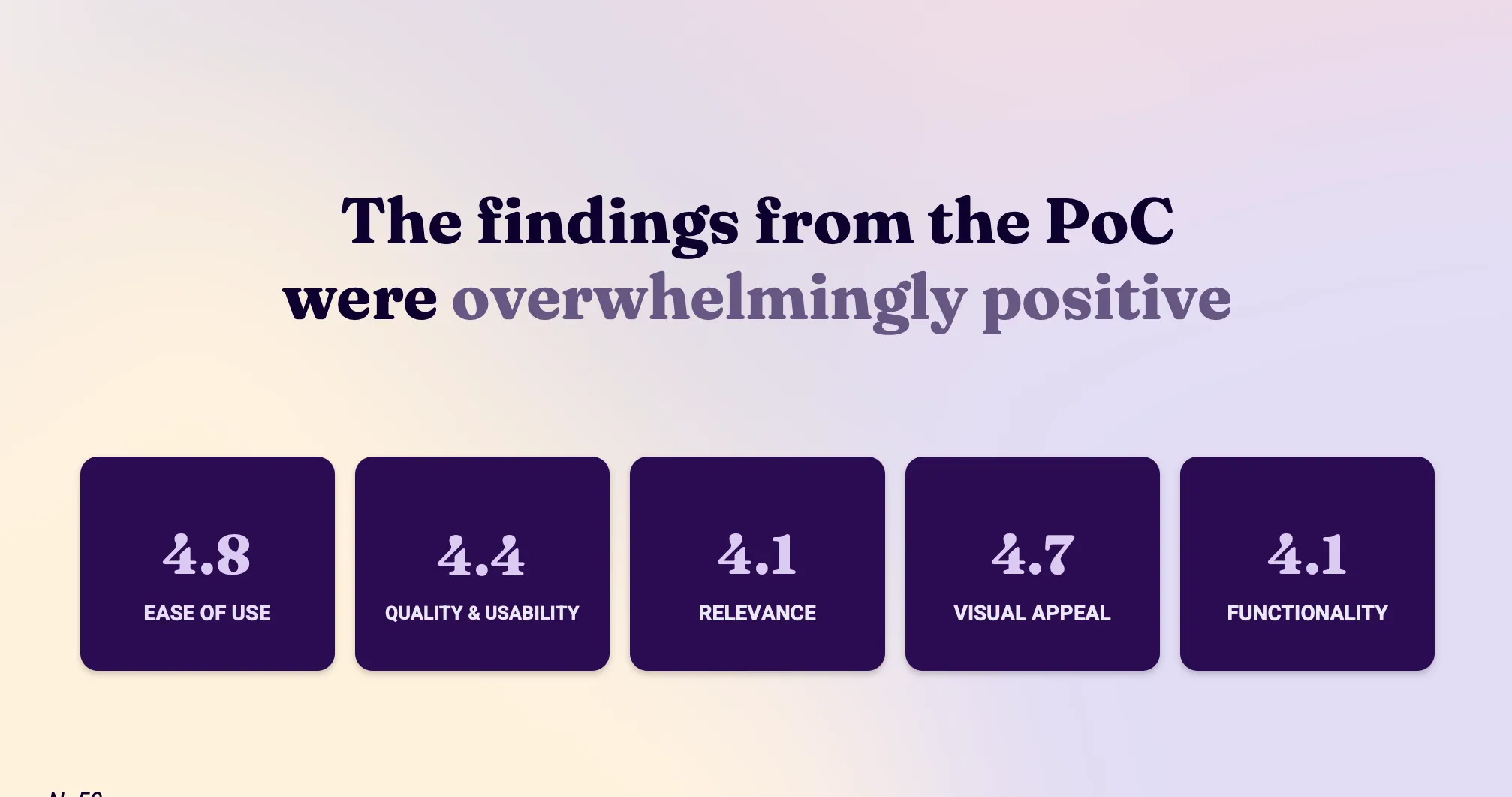
- Mar 2023Kooth won the California DHCS contract using clinical proof from the pilot, $188–271M over four years
- Jan 2024Soluna launched in all 58 California counties
- Status
- Live
- People
- ~50 people across three organizations: IDEO, Kooth Digital Health, and development studio Blackbird
- Kooth's chief product and research officer and executive team as day-to-day partners, with California DHCS reviewing as the funder
- Engineering squads grew from one to six over the build
- 150 young Californians on the co-design council, plus a clinical oversight group of practicing therapists
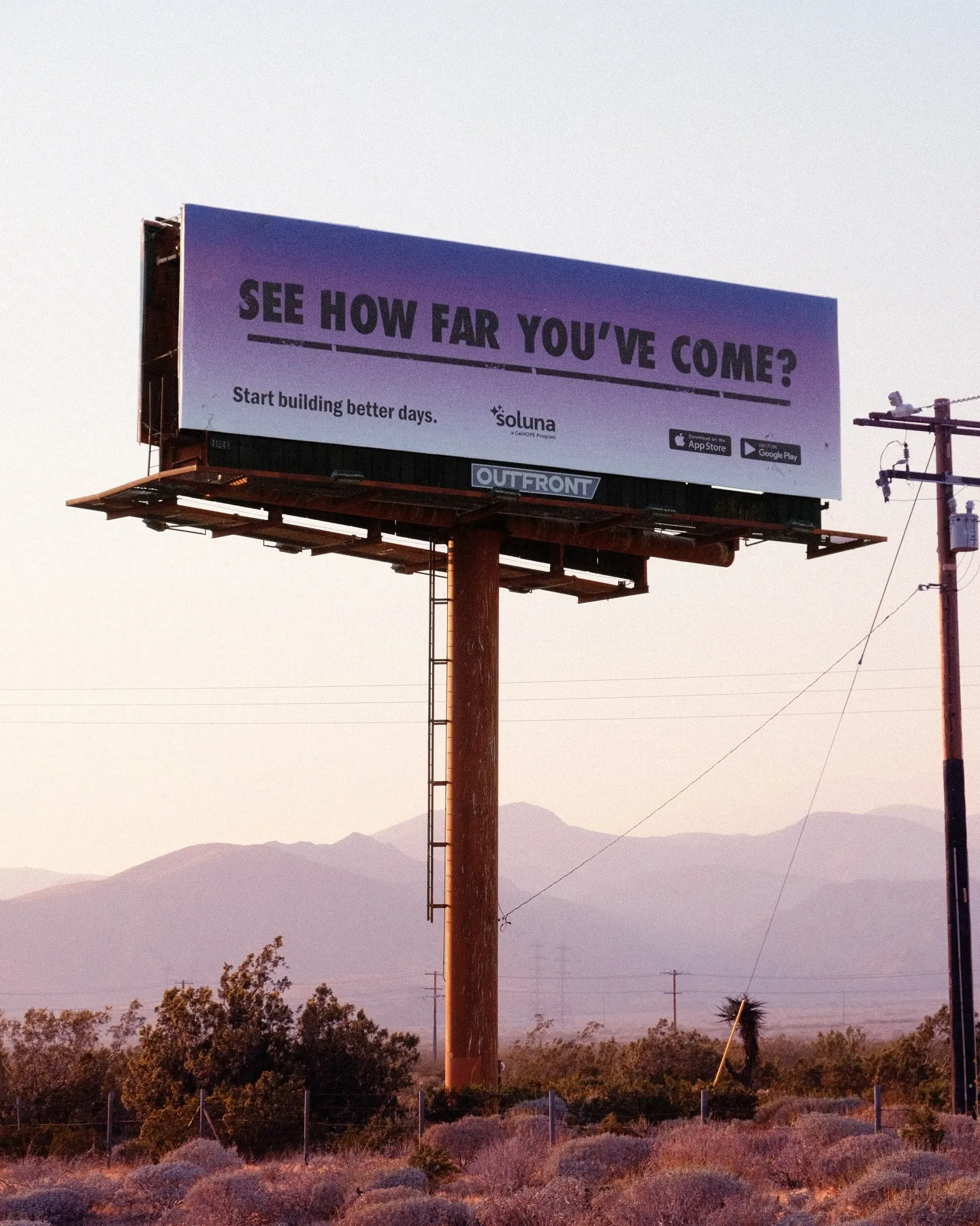
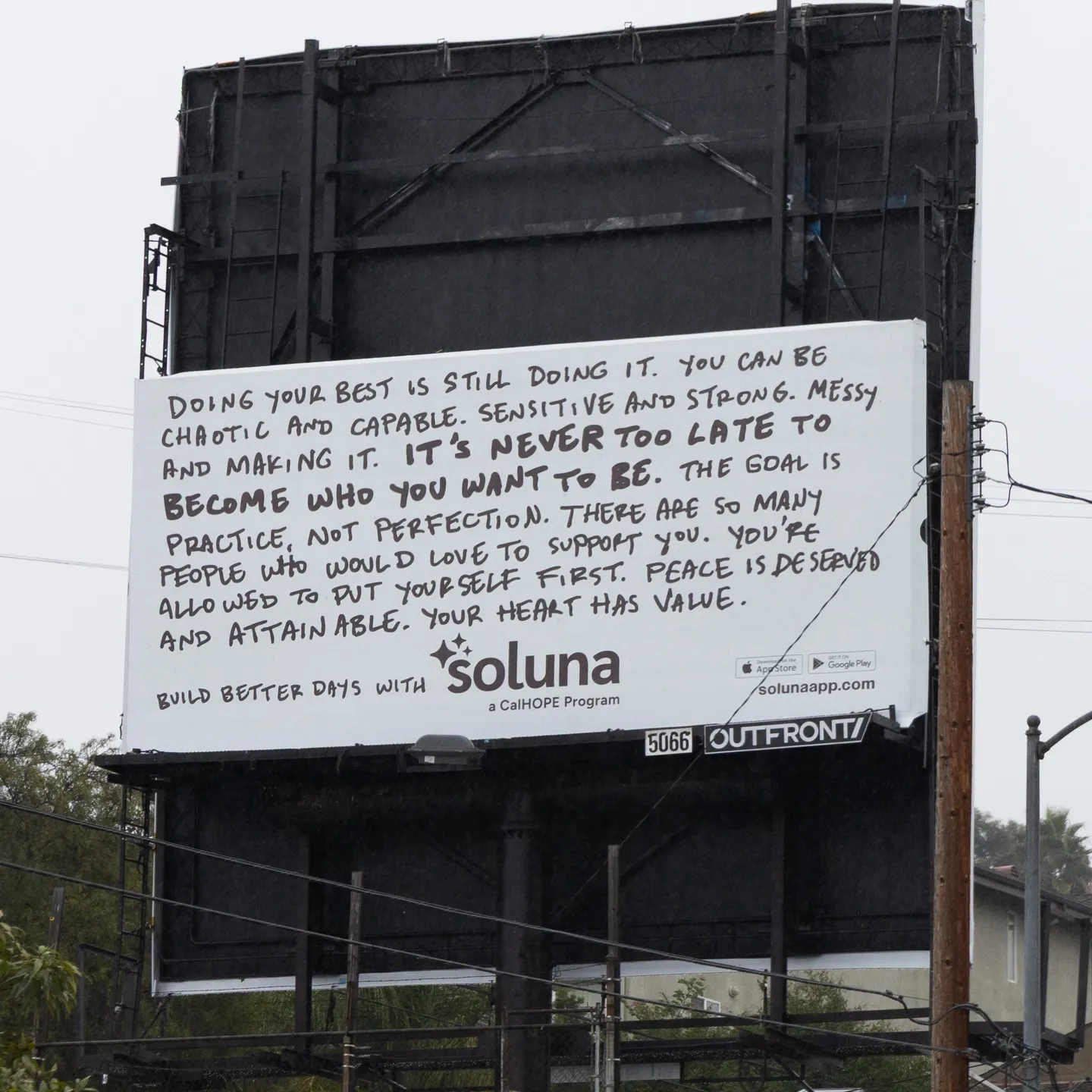
The challenge
One in three California teenagers had experienced serious psychological distress after COVID, while two thirds of children with depression received no treatment. The state screened more than 450 vendors for a free service that every resident aged 13 to 25 could reach from a phone. Kooth, a UK company, brought twenty years of clinical evidence but had no US product and no US product organization. It had nine weeks to prove that its model could work for young Californians, and then had to build and launch a product for an entirely different health system, regulator, and population.
My contribution
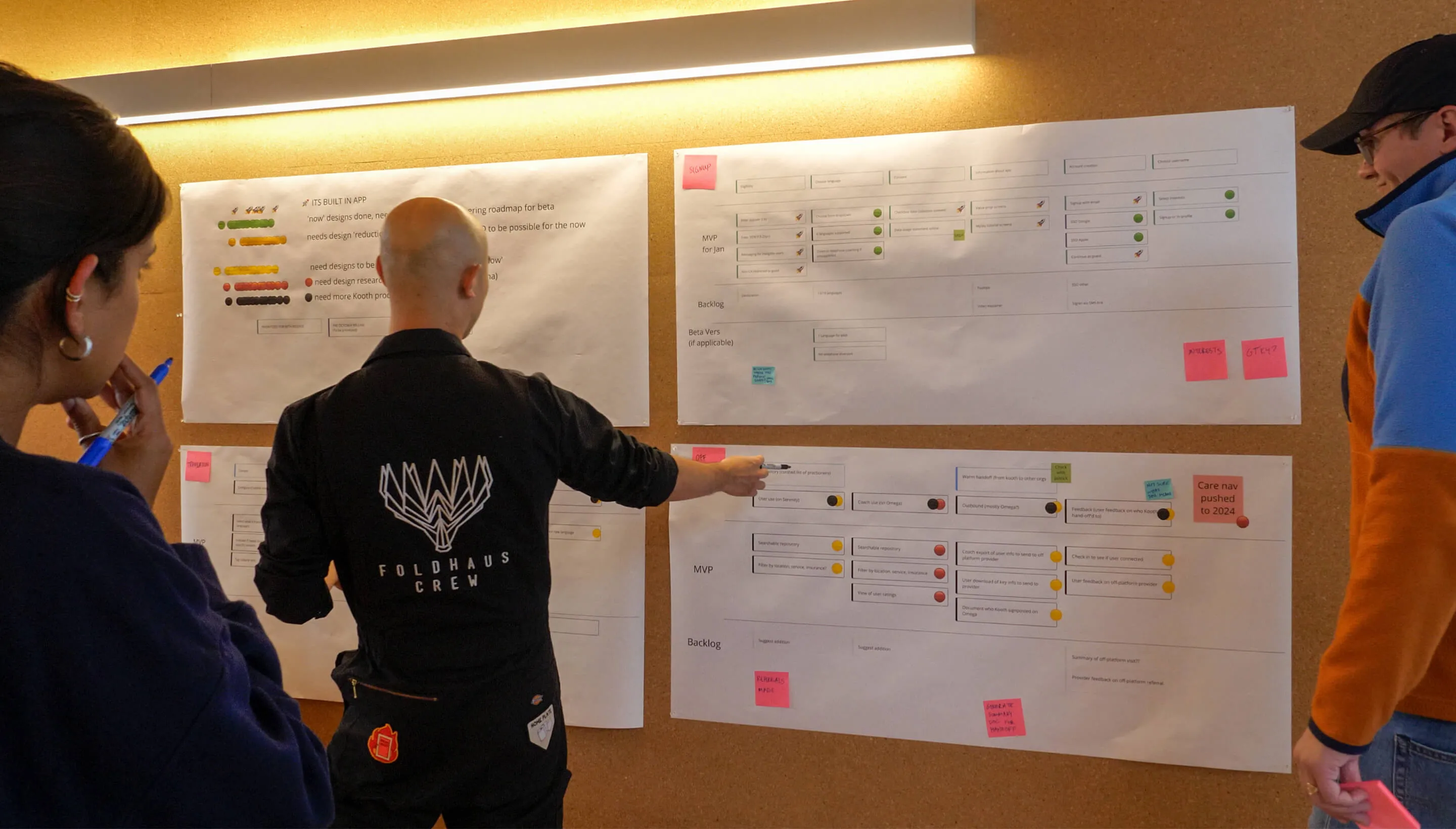
I served as de facto head of product across roughly 50 people at Kooth, IDEO, Blackbird, and contract developers. Working day to day with Kooth’s chief product and research officer and executive team, I translated the clinical model, state requirements, and youth research into one product strategy, roadmap, and operating rhythm. That shared structure let engineering grow from one to six squads without losing the clinical and user evidence behind the product.
- My accountability was reach: how many of the six million eligible young people would sign up, find help, and return.
- I also led the nine-week pilot that produced the clinical proof used to win the statewide contract.
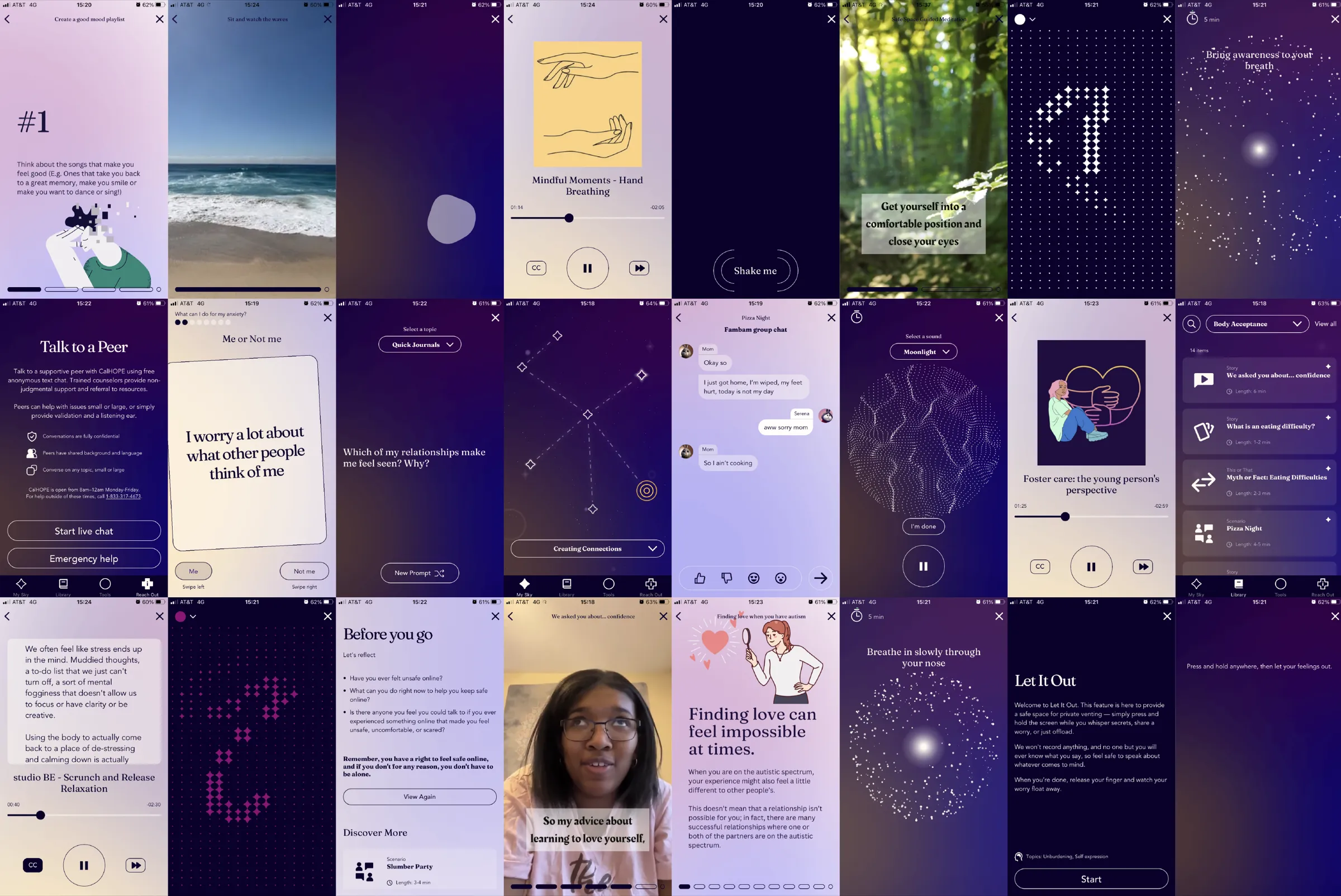
- Sequenced the roadmap content-first so Soluna could serve millions before a statewide coaching workforce existed, then added live support as capacity grew.
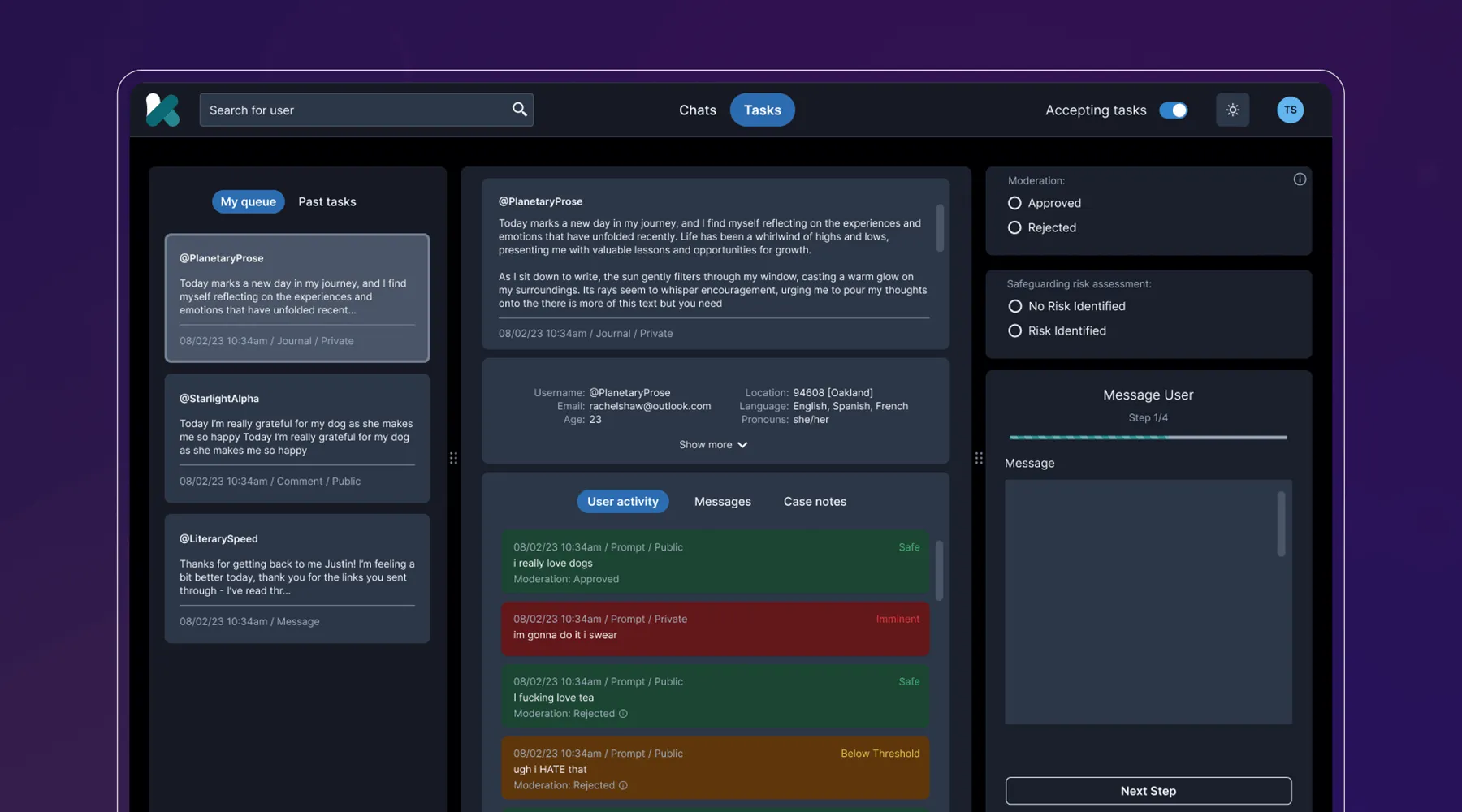
- Made the case to build coaching natively inside Soluna rather than route US users to Kooth’s existing UK platform. Research showed young Californians wanted help in the moment, inside one app, and a handoff to a platform built for a different market would have broken that trust. I then designed both sides of the service: the youth experience and the clinical record coaches use.
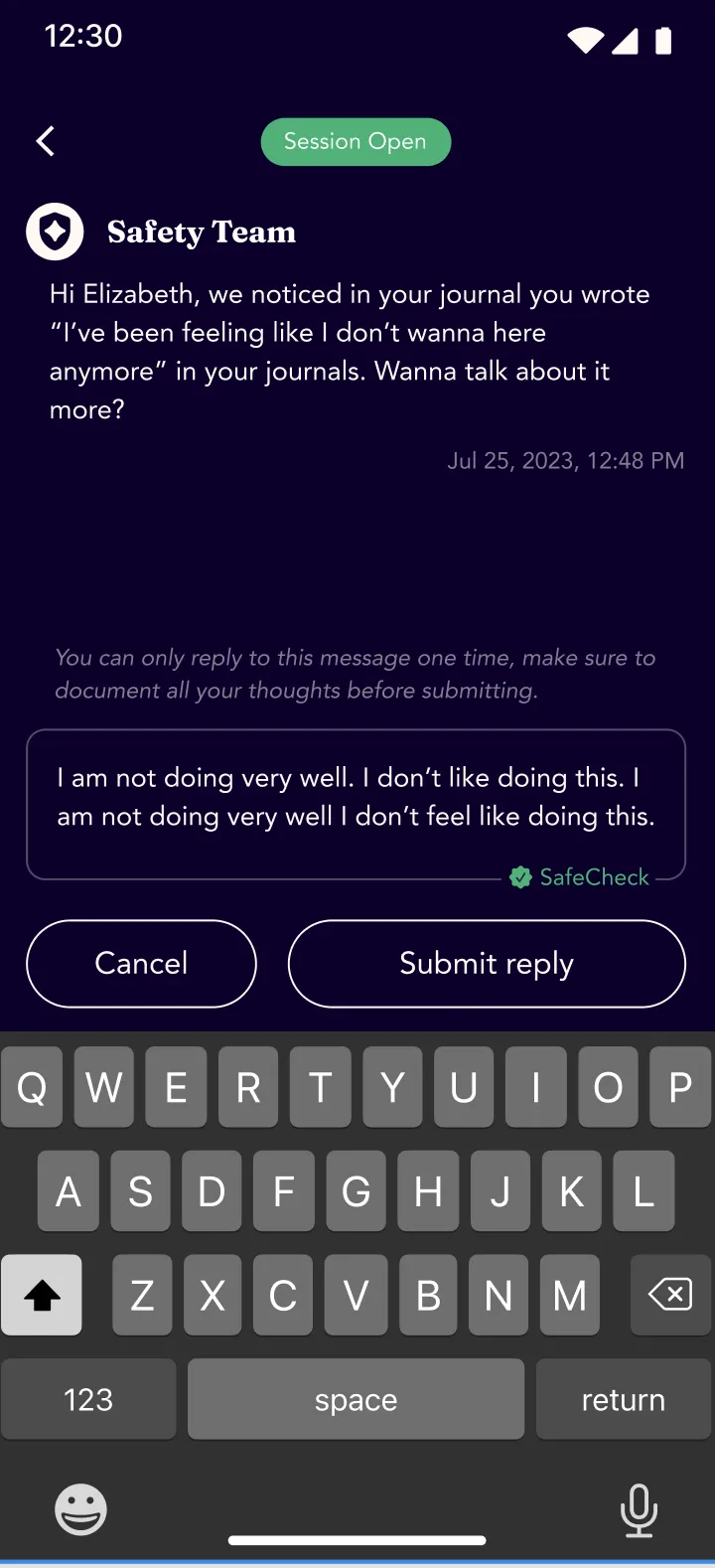
- Shipped a recommendation engine tied to Soluna’s theory of change, plus AI-assisted risk flagging and clinical decision support for coaches.
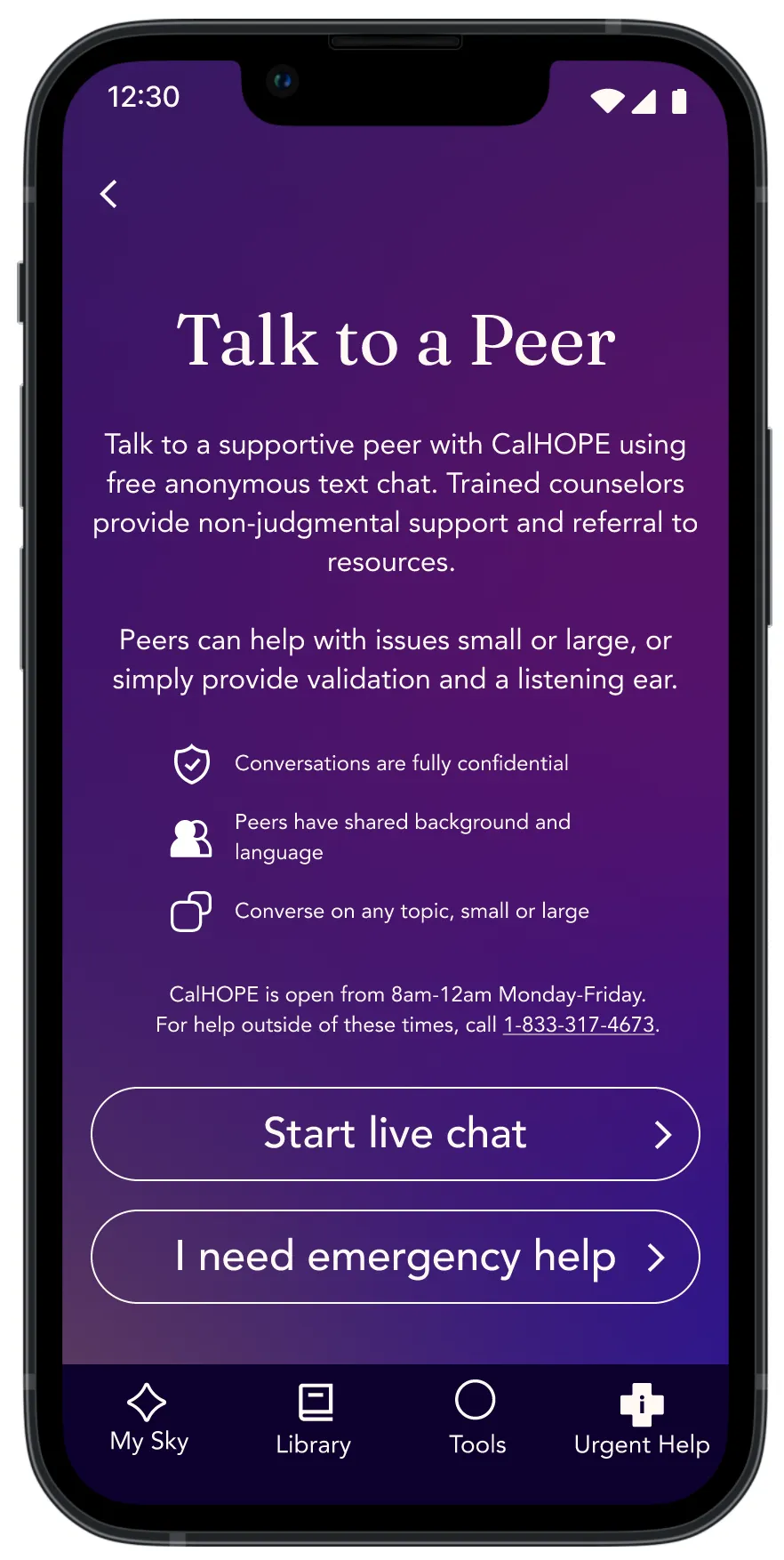
- Recommended sign-up with a birth date, zip code, and email, removing insurance and parental consent as access barriers.
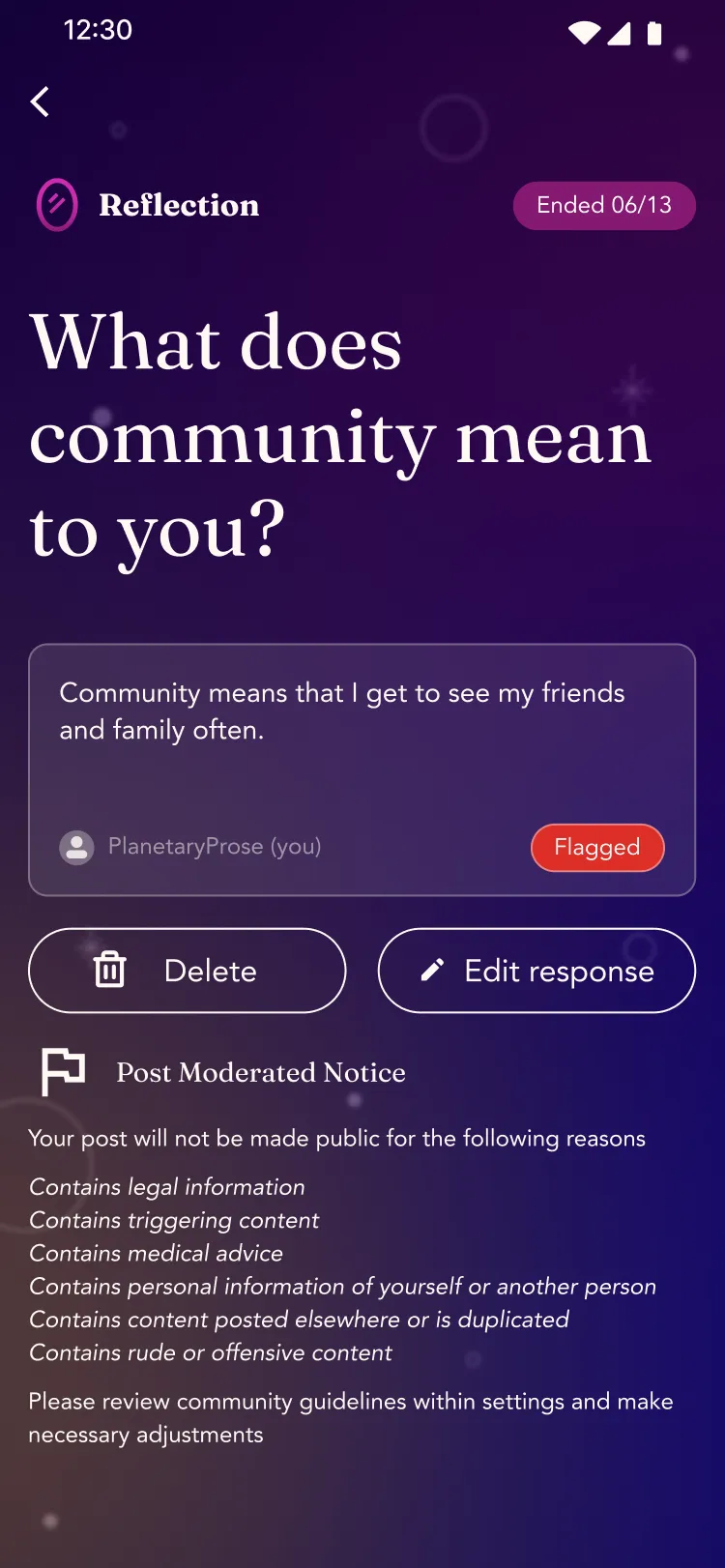
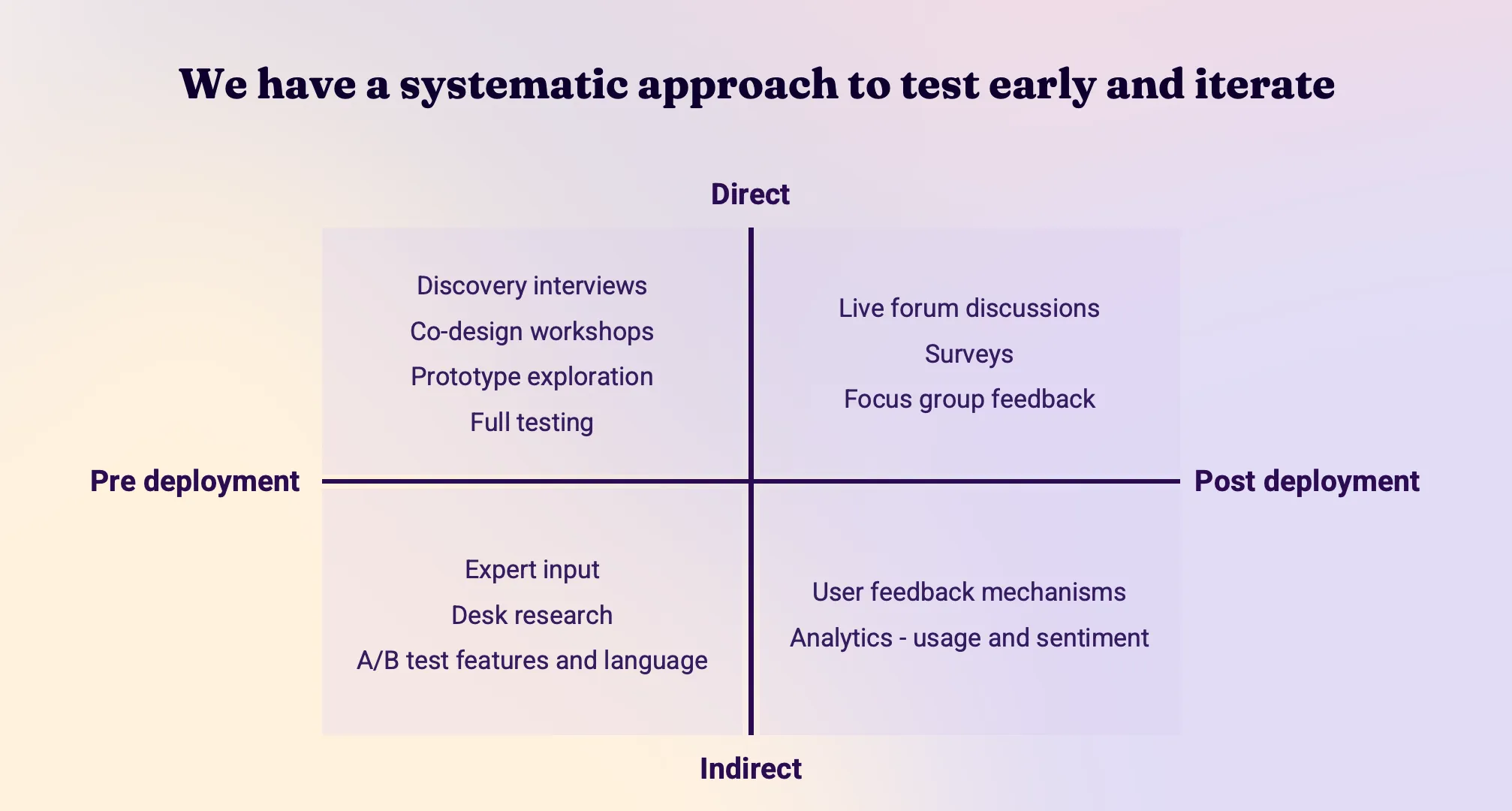
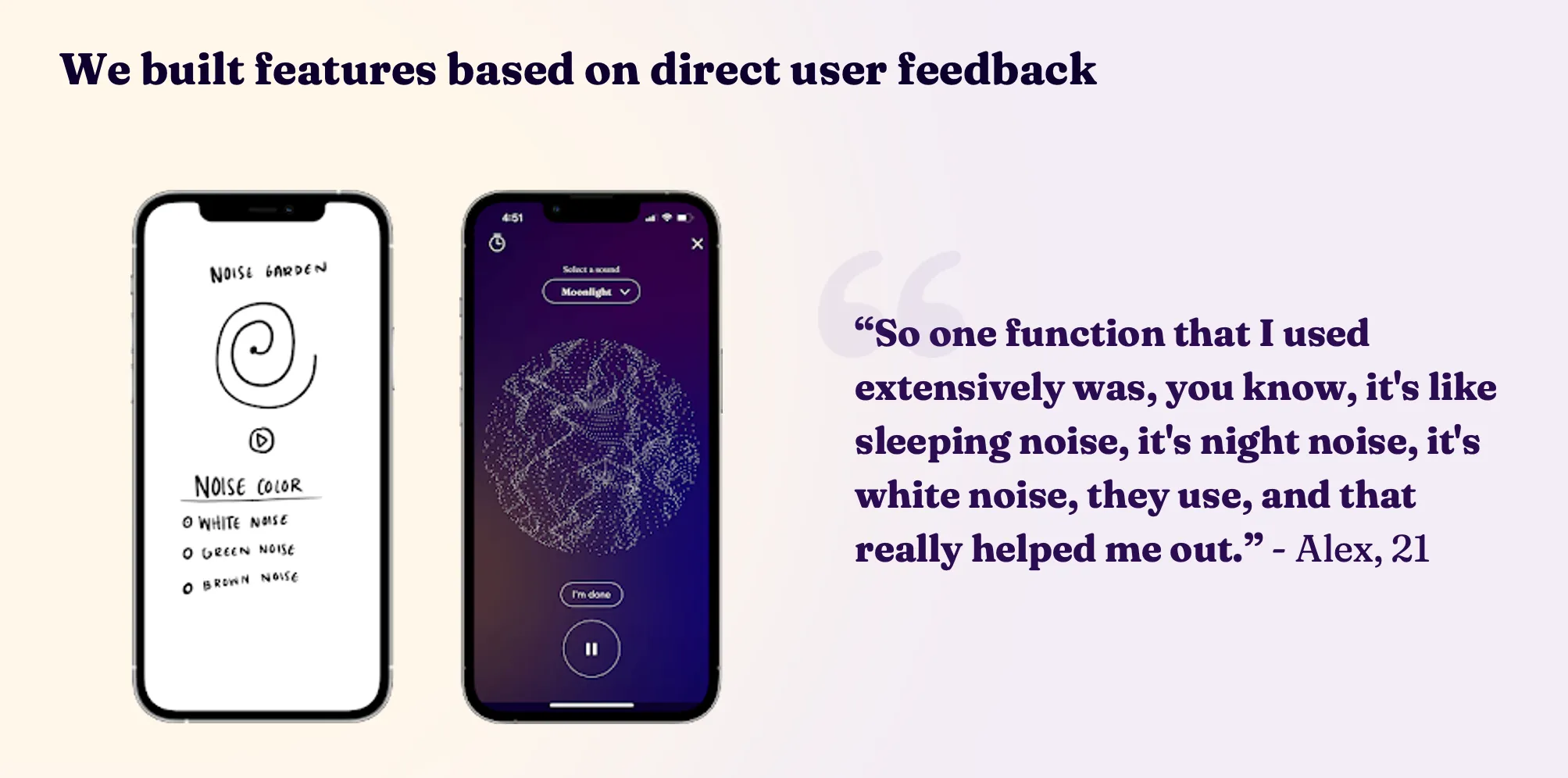
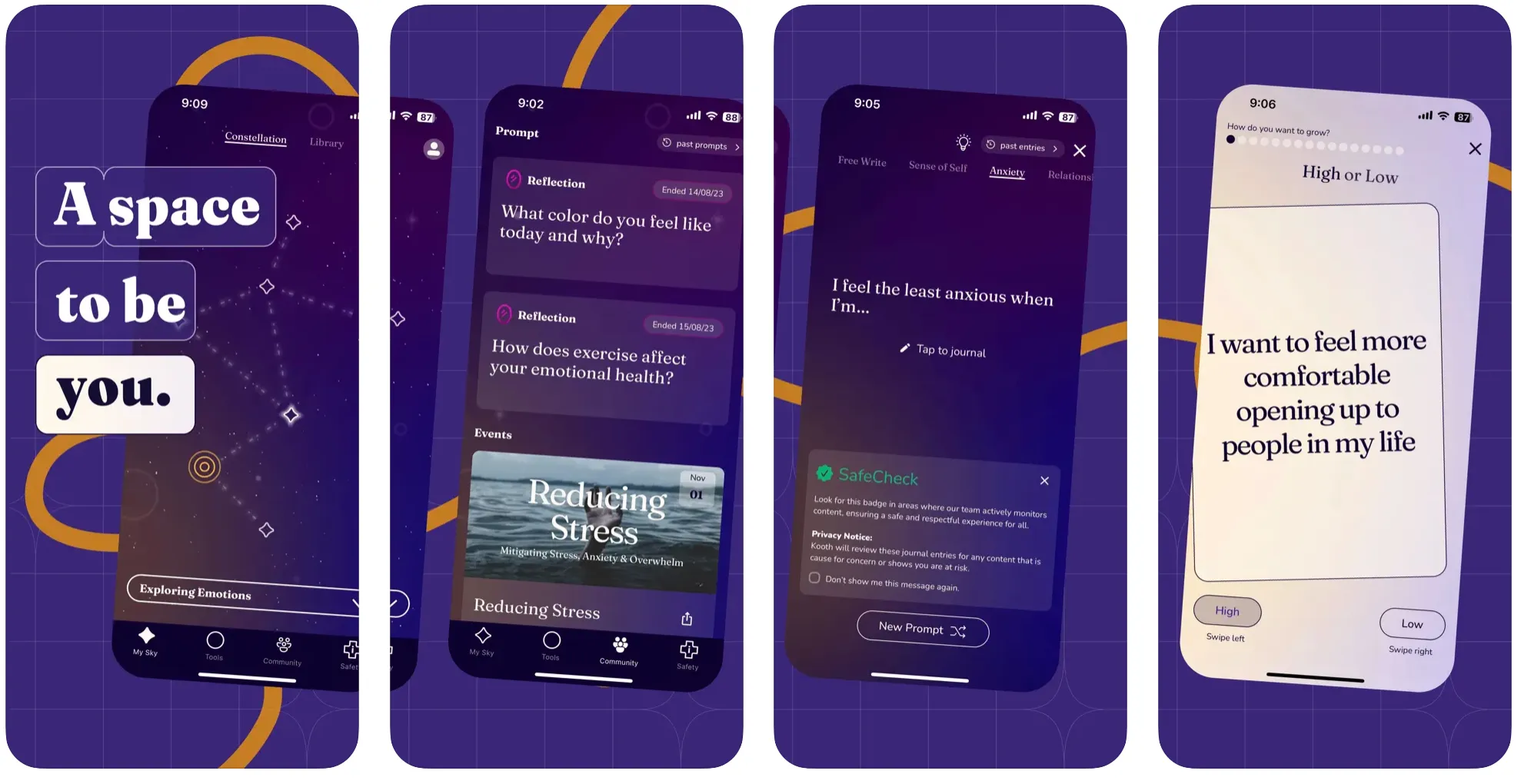
- Established a co-design council of young Californians and a clinical oversight group, then ran fourteen research rounds over seven months. Young people chose the night-friendly palette and the constellation structure.
- Set the testing framework and product roadmap that let engineering grow the platform from self-guided tools to text, live sessions, and video support.
The impact
A young person who needs help at eleven at night can open Soluna and reach a coach in under five minutes. Half of users say it is the first mental health support they have received, and 82–86% report feeling less alone.
More than 156,000 young people have enrolled, including 57% from under-resourced communities. Coaching expanded from text to live sessions and video. The research approach contributed to later studies in Frontiers in Psychiatry and JMIR Formative Research, giving the product a public evidence trail alongside its statewide reach.
Press & sources
- IDEO2025Mental Health, Co-Designed
- Frontiers in Psychiatry2025Grounding digital mental health in a theory of change
- JMIR Formative Research2026School and community stakeholder perceptions of Soluna
- Kooth (LSE:KOO)2023$188m four-year contract in California
- BusinessWire2024California launches free digital behavioral health platforms
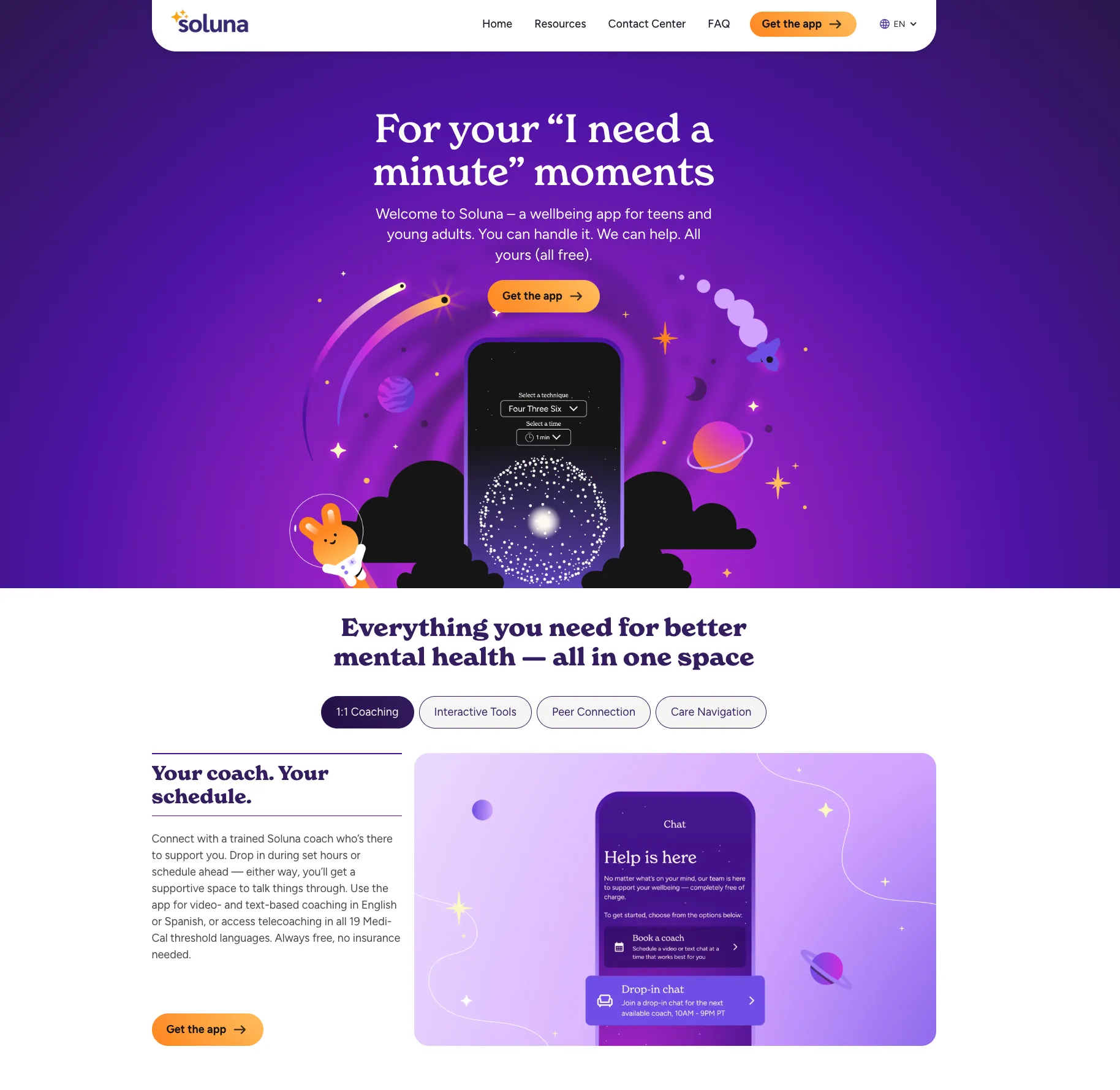
- SolunaThe app, free to every Californian aged 13–25