KPMG
Interactive Installations and Narrative for a $450M Campus
Nine digital installations brought KPMG’s learning campus to life through shared play, storytelling, and spatial interaction.
- My role
- Interaction designer · Interactive installations lead
- Timeline
- Aug 2018–Sep 2019 · Campus opened Jan 2020
- Status
- Live
- People
- IDEO environments, brand, and interaction design teams
- KPMG campus development and brand leadership
- Fabrication and AV integration partners
The challenge
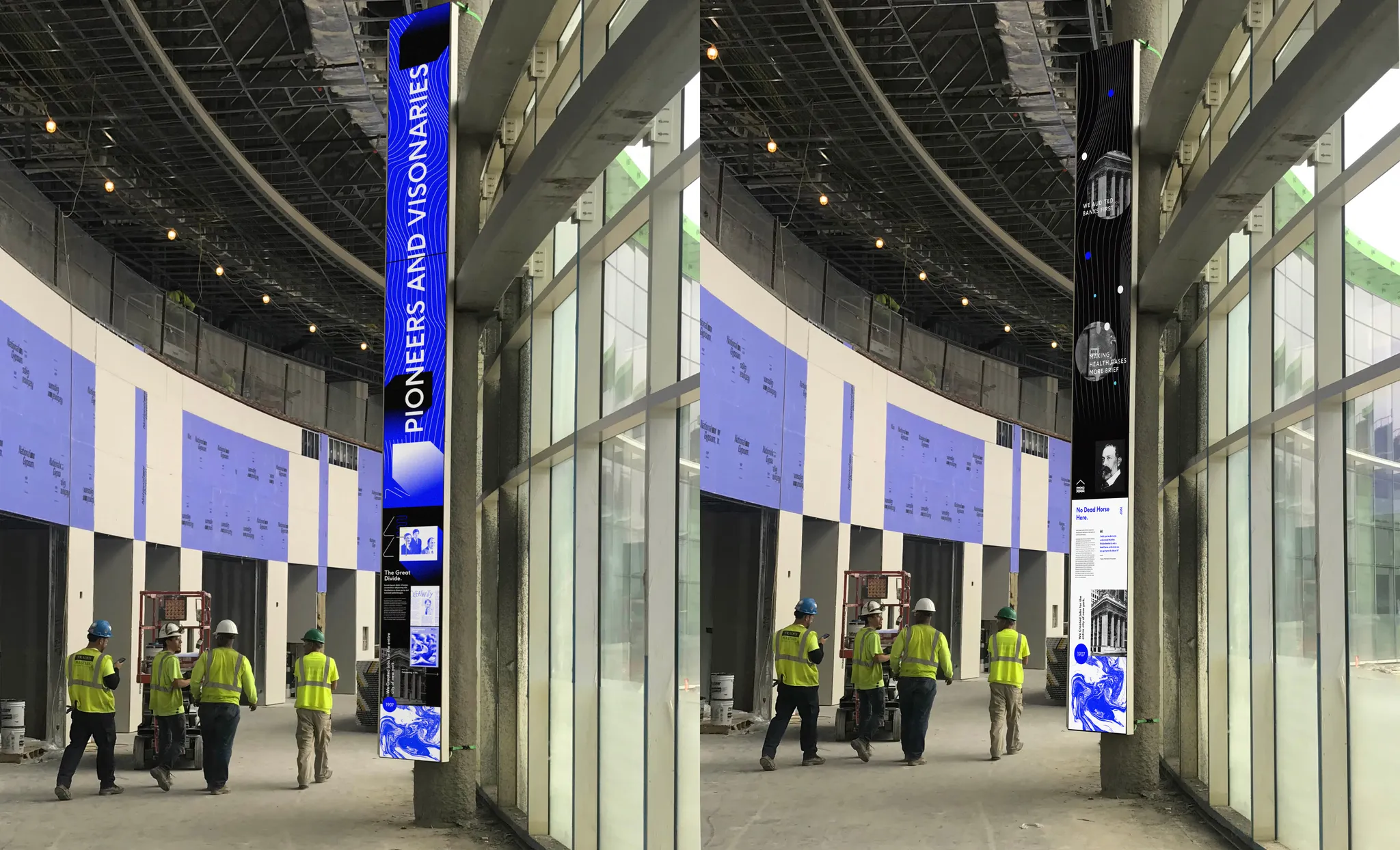
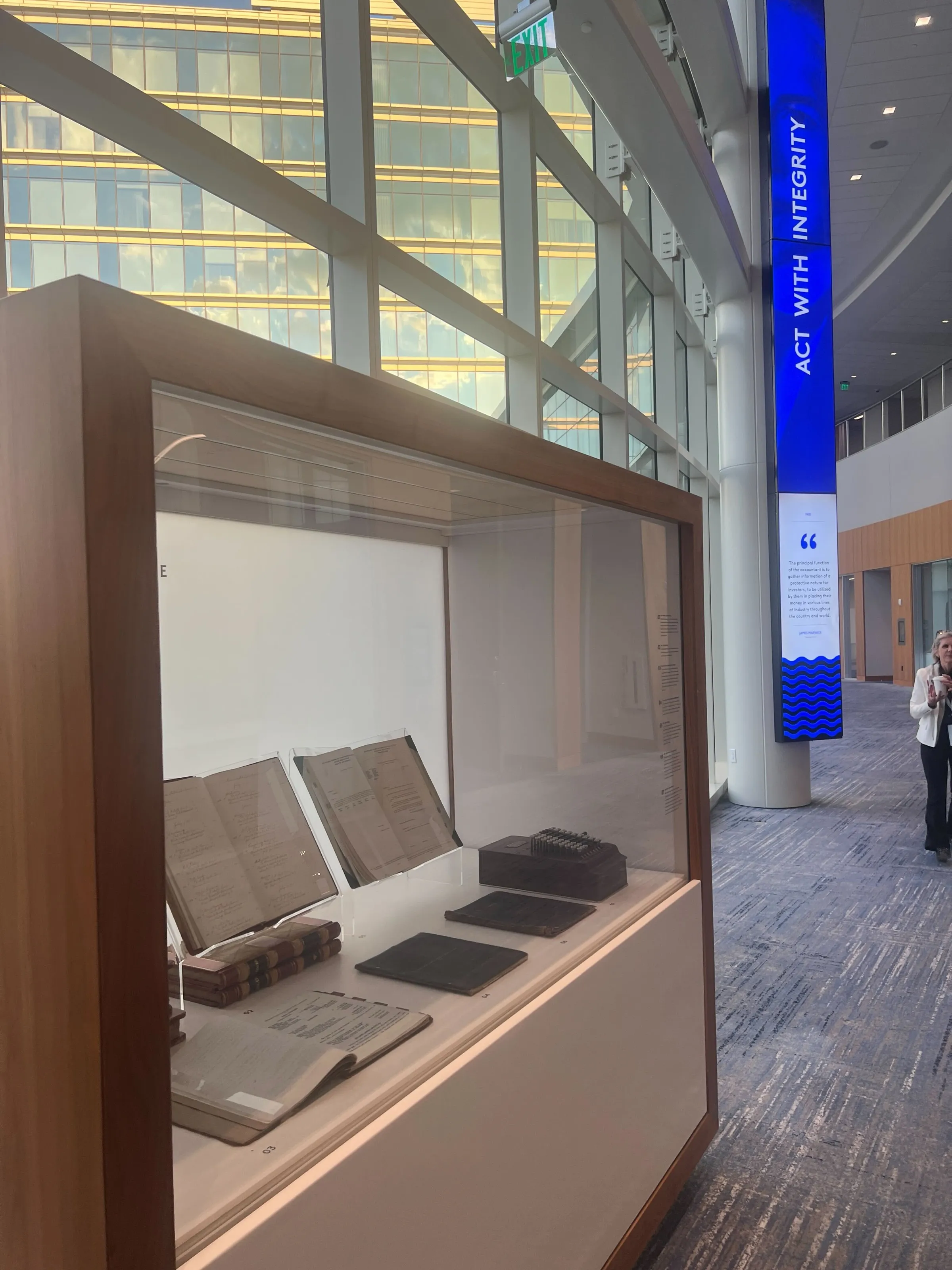
KPMG was building Lakehouse, a 780,000-square-foot learning campus intended to strengthen connection across a large, distributed organization. The architecture carried a $450 million ambition; the digital experiences needed to make that sense of belonging active rather than decorative.
Nine installations had to operate as a coherent campus system while surviving the realities of public hardware, spatial scale, fabrication partners, and long-term daily use by groups arriving with no instructions and little time to learn.
My contribution
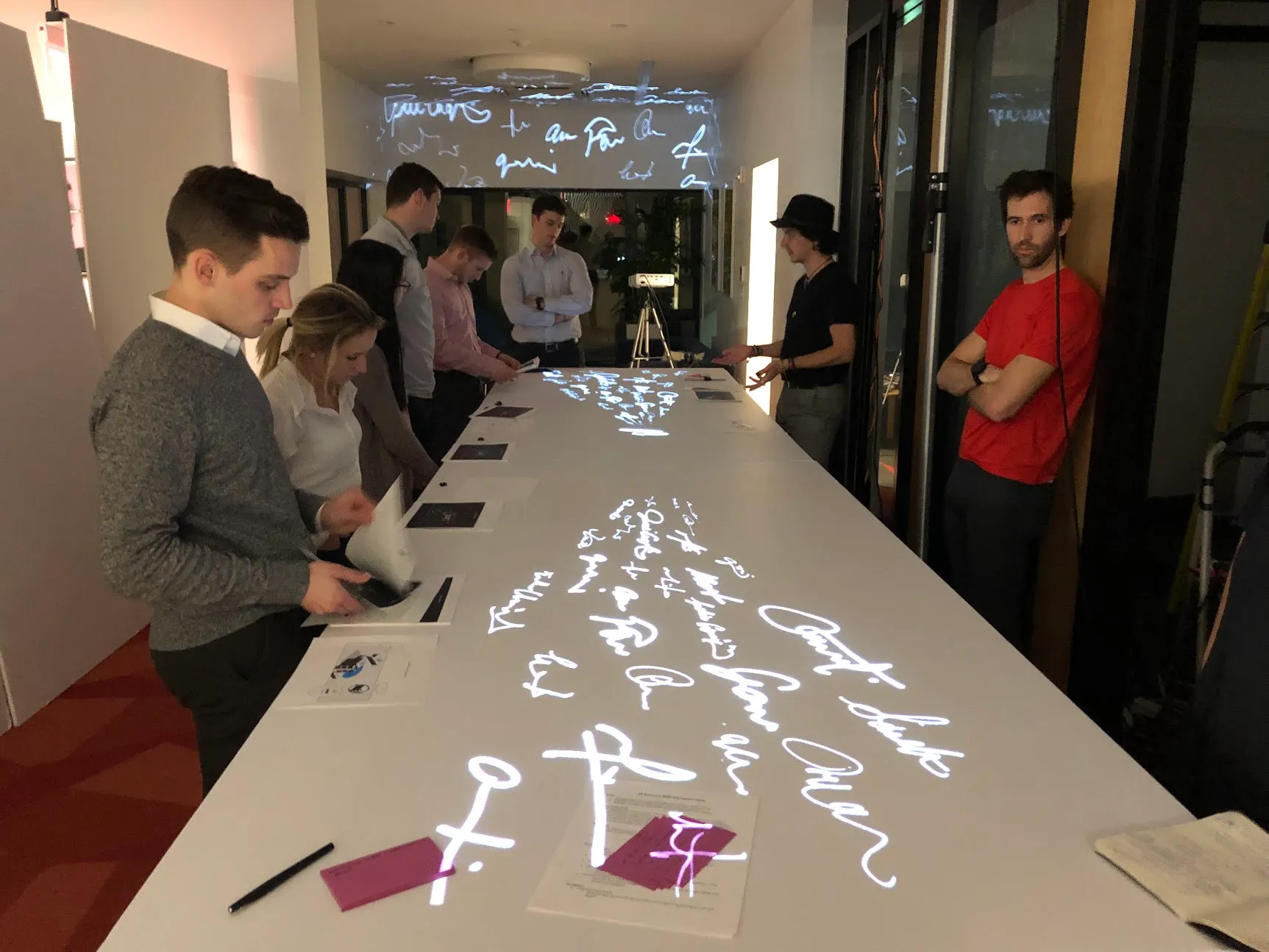
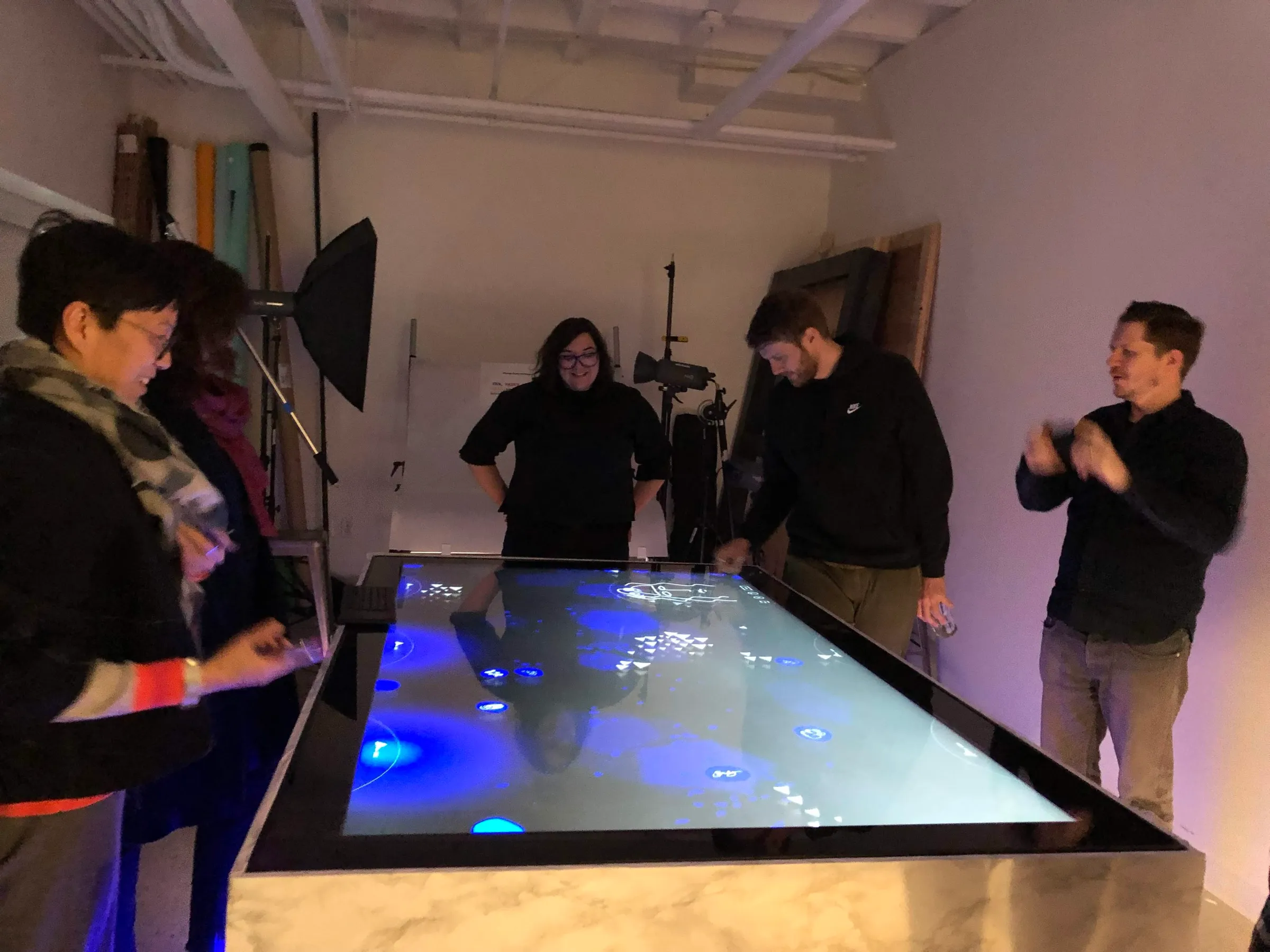
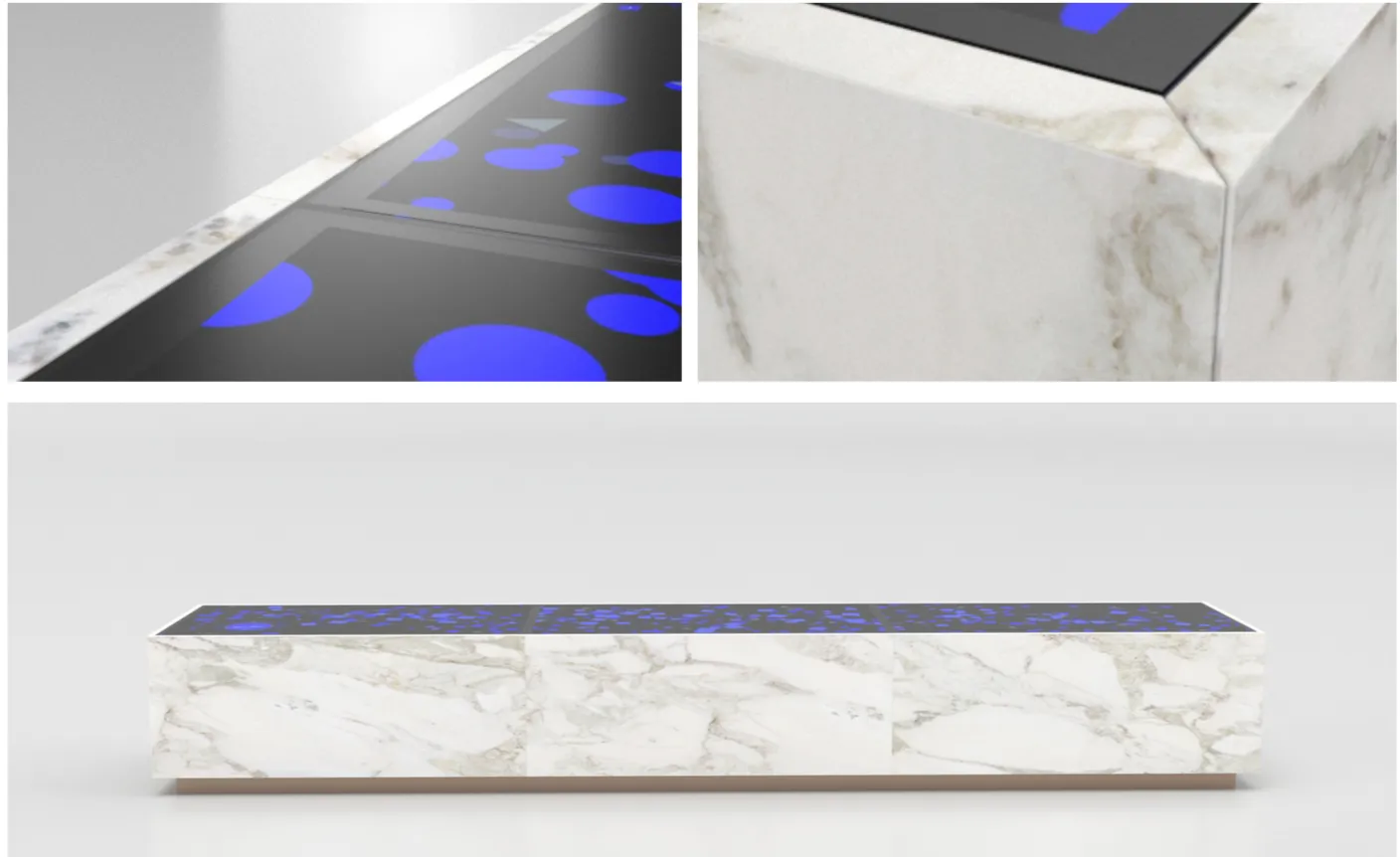
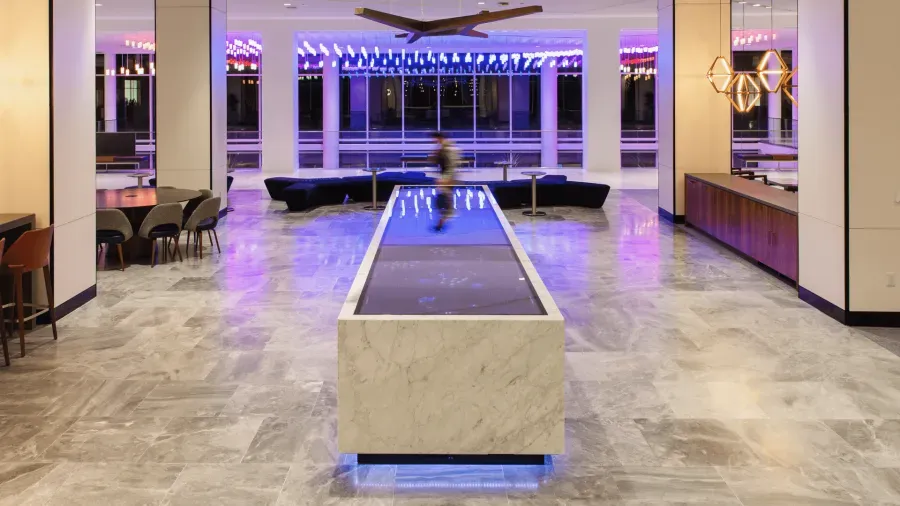
I led interaction design and prototyping for the installations from concept through hardware validation and launch. My primary focus included the Community Table, a large multi-touch surface for shared exploration, and Halo Effect, circular LED experiences embedded in elevator bays.
I connected interaction design to production through three core contributions:
- Built and tested full-scale prototypes so gestures, sightlines, group behavior, and physical ergonomics shaped the software.
- Sourced and validated circular LED components before fabrication, reducing risk around a hardware form the team had not used before.
- Created a Figma-to-Unity pipeline that translated live 2D design files into 3D spatial experiences, giving designers a faster way to iterate without rebuilding every change in the game engine.
The pipeline became shared infrastructure across the work, helping visual, spatial, and software teams evaluate the same experience as it evolved.
The impact
All nine installations opened with Lakehouse in January 2020. KPMG reported that interns exposed to the campus were 40% more likely to accept job offers, and the project received recognition from Engineering News-Record and the Orlando Business Journal.
Lakehouse later became a major hub for KPMG’s AI-skills training. The installations gave the campus a durable interactive layer, while the production tools demonstrated how product design could reduce friction across disciplines as well as shape what people used on each screen.